How loud is too loud? If you have ever been kicked off a trail by a landowner or watched a ranger pull out a sound meter, you already know the answer. Most trail systems in the US run a 96 dB limit at 20 inches from the tailpipe, and a bone-stock 250 four-stroke with a worn-out packing can hit 102 dB on a bad day. That is not a rumor. I have measured it.
The mistake almost everyone makes first
The instinct is to buy the cheapest aftermarket slip-on with a quiet insert and bolt it on. I have watched three riding buddies do exactly this, and two of them ended up louder than stock. Here is why: a slip-on changes the muffler, but the header pipe, the airbox, and the jetting stay the same. You get a different tone, not a lower number.
Worse, a lot of budget slip-ons come with a removable spark arrestor and a tiny 22 mm quiet insert. That insert chokes the exhaust so badly the bike runs lean, pops on decel, and loses about 15 percent of its midrange. The rider then pulls the insert to get power back, and the bike is loud again. Money spent, problem unsolved.
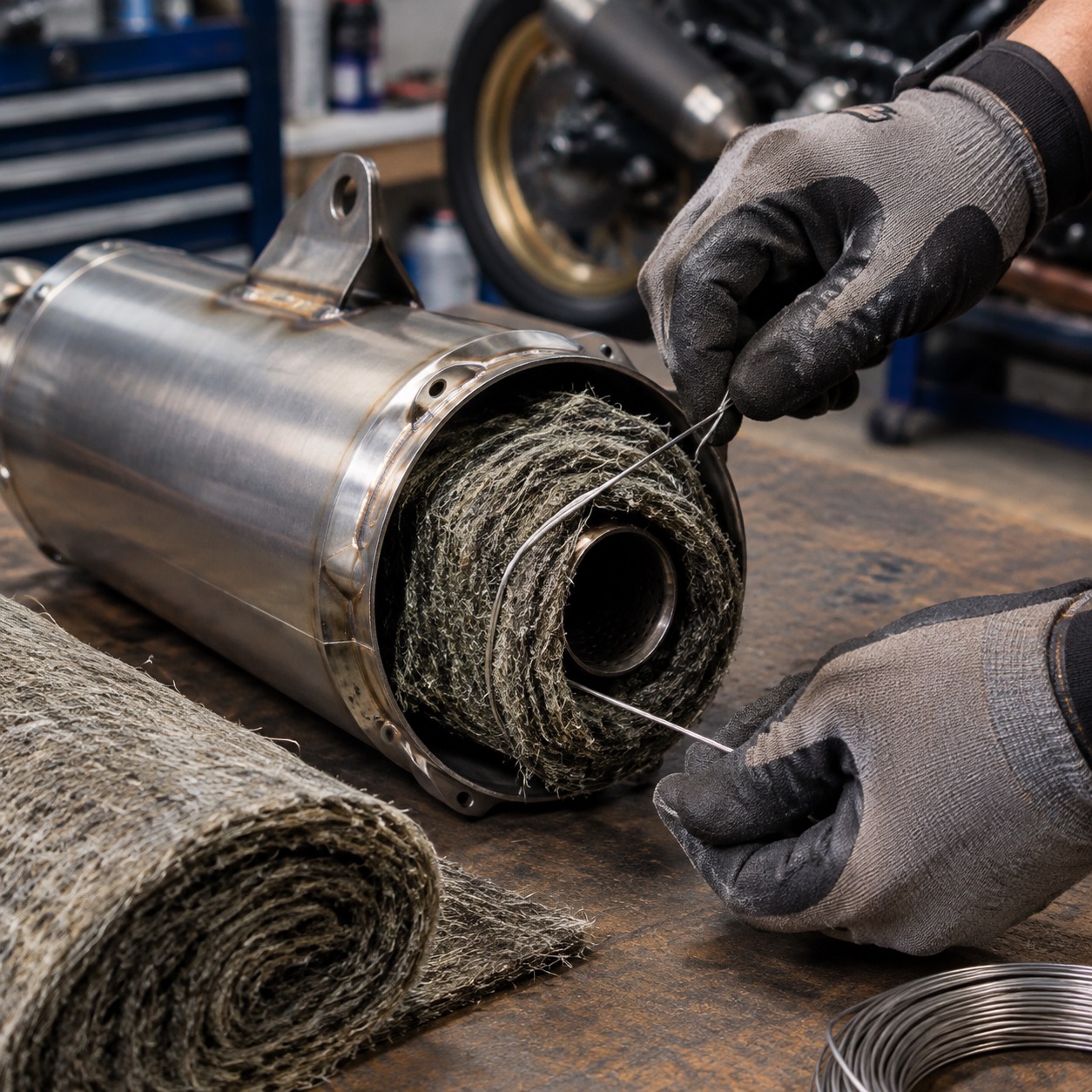
The other common error is repacking with generic fiberglass mat meant for a car muffler. It burns out in about 8 hours of hard riding. I pulled a muffler apart last spring after a customer complained his 300 two-stroke got loud again after two weekends. The packing was already black and crumbly at the core, with maybe 40 percent of the original volume left.
What actually controls exhaust noise
Sound comes out of the tailpipe in two ways: pressure pulses from the combustion event, and resonance inside the muffler body. You can only fix both by addressing volume, absorption, and flow path together.
Volume matters more than most people think. A muffler with 1.8 liters of internal volume will always be quieter than a 0.9 liter can, given the same packing. Absorption is the fiberglass or stainless wool that turns sound energy into heat. Flow path is how the gas travels through the can. Straight-through designs flow best but absorb least. Chambered designs absorb more but add backpressure.
For a trail bike, you want a mid-length can, around 300 to 350 mm, packed with high-density basalt or stainless wool, and a spark arrestor that does not neck down below 28 mm on a 250. That combination typically lands you at 92 to 94 dB without a noticeable power loss.
One more thing: valve clearance and jetting affect noise too. A bike running rich will sound duller but actually produce more low-frequency thump. A lean bike cracks and pops. Get the fueling right before you blame the muffler.
Step-by-step: quieting a trail bike properly
Step 1: Measure before you touch anything
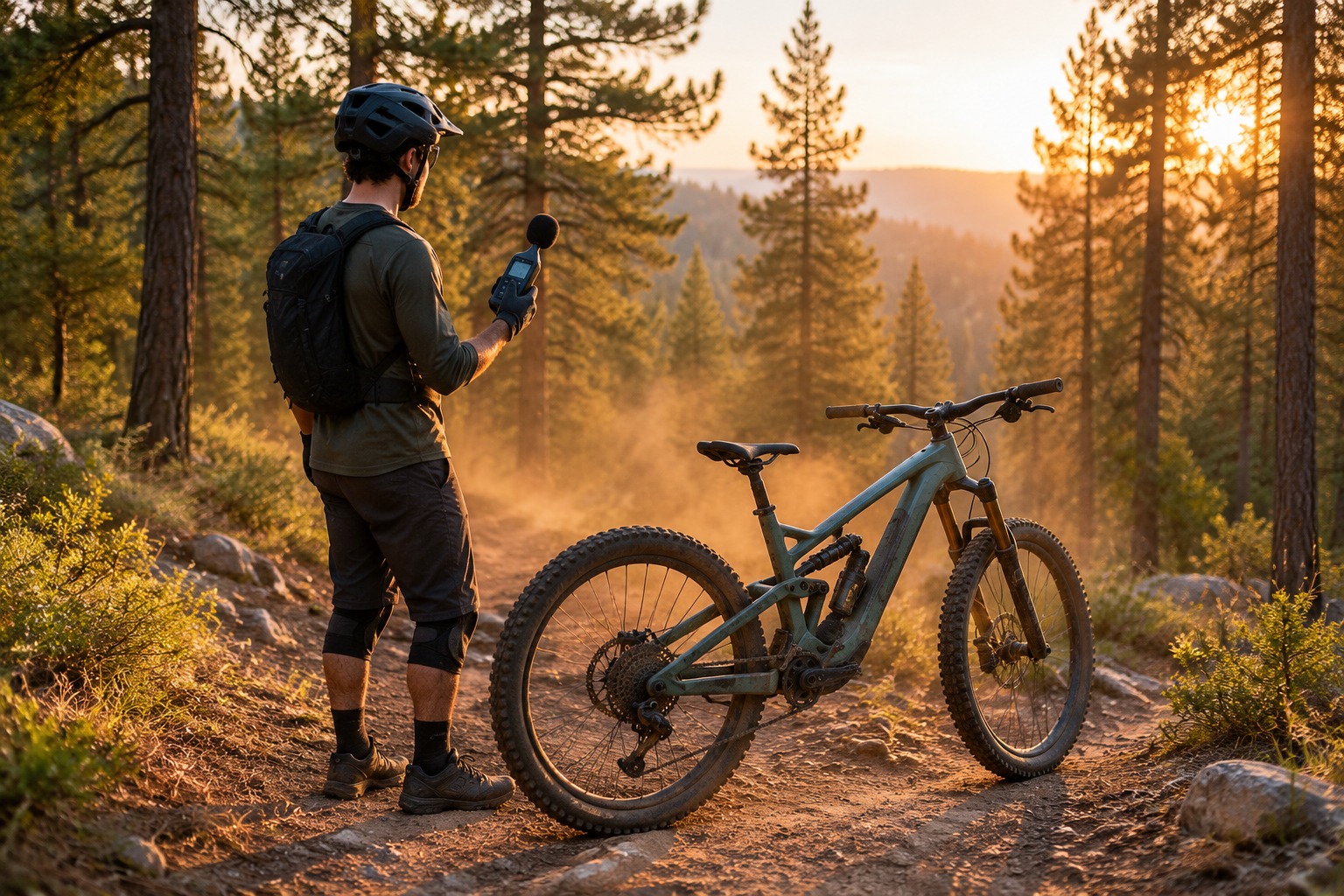
Buy or borrow a sound meter. A basic unit costs about $40 online. Measure at 20 inches from the tailpipe, at a 45-degree angle, with the engine at half throttle. Write the number down. You cannot improve what you have not measured.
Step 2: Inspect and repack
Remove the muffler and drill out the rivets. Pull the core. If the packing is discolored or compacted, replace it. Use basalt fiber mat, not cheap fiberglass. Wrap it tight, secure with stainless wire, and reassemble. This alone often drops 3 to 5 dB on a bike that has not been repacked in two seasons.
Step 3: Check the insert and arrestor
If your bike has a quiet insert, measure its inner diameter. Anything under 26 mm on a 250 four-stroke will hurt power. Step up to a 30 mm insert or a perforated cone style. For two-strokes, a turbine-style spark arrestor flows better than a screen type and still passes the 96 dB test.
Step 4: Re-jet if needed
After repacking and changing the insert, ride for 20 minutes and check the plug. If it is white, go one size richer on the main jet. A properly jetted bike runs cooler and quieter at trail speeds.
Step 5: Re-measure and compare
Use the same meter, same distance, same throttle. If you started at 101 dB, a good repack and insert change should get you to 93 or 94. That is a 7 to 8 dB drop, which sounds about half as loud to the human ear.
A real example with numbers
Last fall a customer brought in a 2019 WR250F. Stock, with 60 hours on the original packing, it measured 99 dB. We repacked with basalt mat ($28), swapped the stock insert for a 32 mm perforated cone ($45), and re-jetted one size richer ($12 for the jet). Total cost: $85. Final measurement: 93 dB. He passed the local trail inspection the next weekend and said the bike felt smoother off the bottom.
Compare that to the $320 slip-on he almost bought, which would have measured 97 dB and required a fuel controller to run right. The cheap fix worked better because it addressed the actual problem.
Your action checklist
- Measure your current dB level before buying anything.
- Repack with basalt or stainless wool, not generic fiberglass.
- Check insert diameter: 28 mm minimum for 250cc, 32 mm for 450cc.
- Re-jet after any exhaust change and verify with a plug reading.
- Re-measure and log the result so you know what worked.
- Recheck packing every 40 to 50 hours of trail riding.
Quiet exhaust for trail bikes is not about buying the most expensive can. It is about maintaining what you have and making small, measured changes. Do the steps in order, keep your receipts, and you will spend under $100 instead of $400. Your neighbors on the trail will notice.