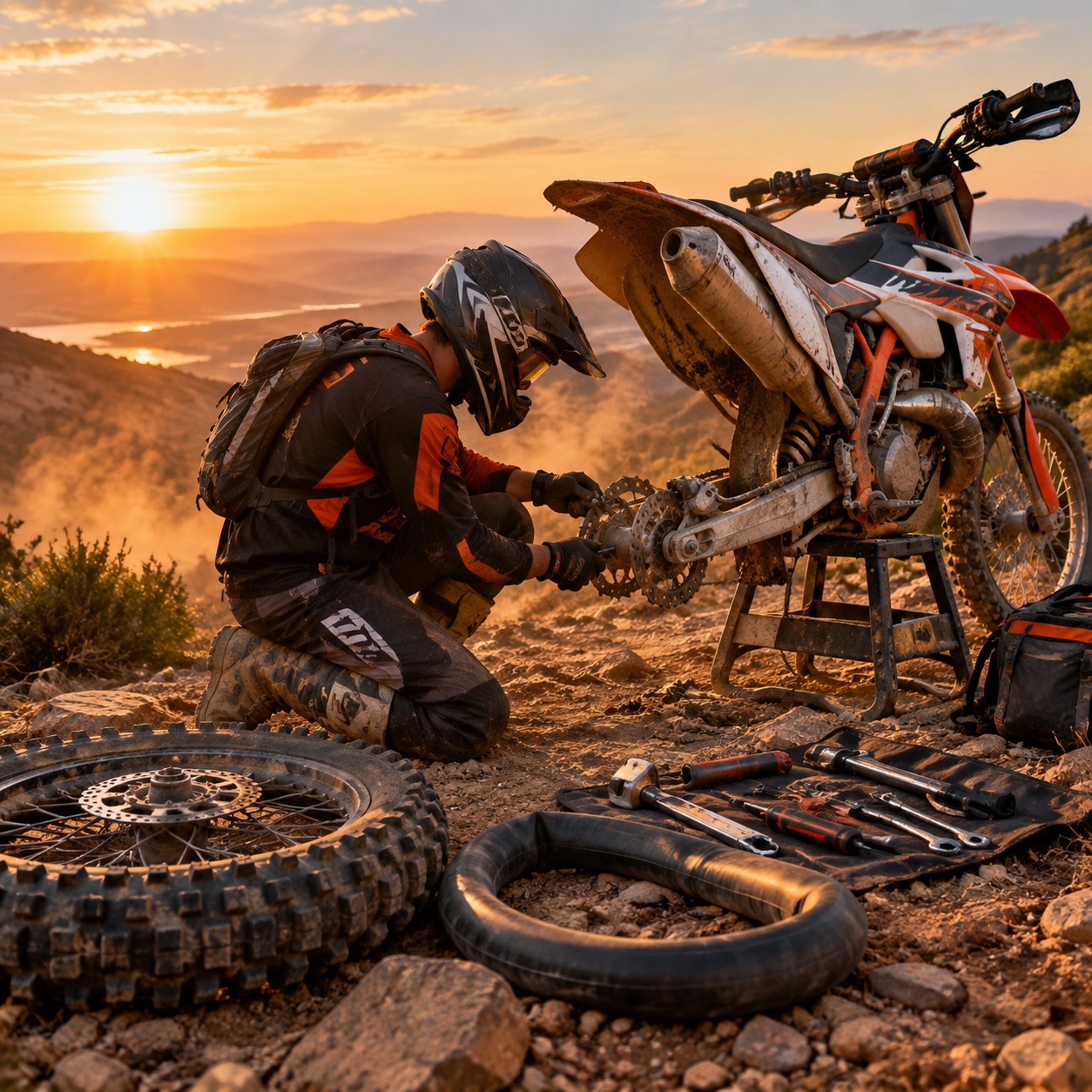
Last spring a guy pulled into the staging area with a flat rear and no spare tube. He’d been running tire balls for eight months, and one of them had finally given up somewhere on a rocky climb. We spent forty minutes pulling the tire, digging out nineteen little orange spheres, and stuffing a borrowed 21-inch tube inside a 19-inch tire just to get him back to the truck. That afternoon is basically the whole tire balls vs tubes argument in one scene.
What each one actually is
A tube is a rubber donut that holds air. That’s it. You’ve seen a hundred of them. A tire ball is a solid, air-filled sphere roughly the size of a racquetball, and you stuff a bunch of them into the tire casing instead of a tube. Most dirt bike rears take somewhere between 18 and 24 balls depending on tire size and how firm you want the feel.
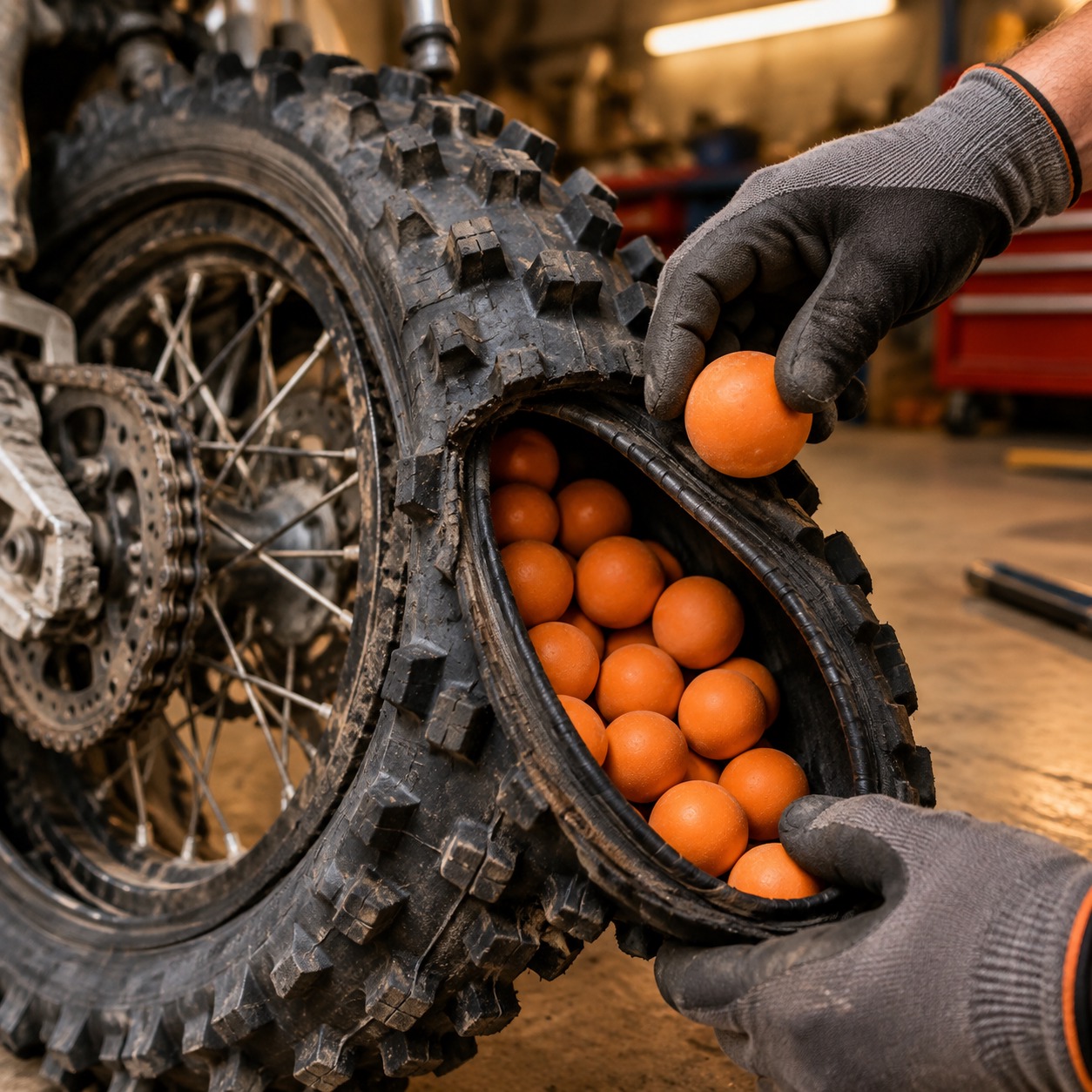
No air means no pinch flats. That’s the entire sales pitch, and it’s a real one. Balls also let you finish a race on a flat because the balls themselves hold the tire’s shape — they don’t deflate, they just get ground down. Tubes can do that too, sort of, if you’re willing to ride on a shredded carcass and hope the rim doesn’t eat itself.
The tradeoff shows up the moment you need to change a tire, and it shows up again at the cash register.
The money, laid out plainly
Here’s what I’ve actually paid over the last two seasons, running 18-inch rears on a 300 two-stroke in rocky, rooty terrain.
| Item | Cost | How long it lasts |
|---|---|---|
| Heavy-duty tube | $28-35 | 2-6 months, sometimes one bad day |
| Ultra heavy-duty tube | $45-55 | 4-10 months |
| Tire ball set (18-24 balls) | $180-260 | 12-24 months |
| Replacement single ball | $9-14 | As needed |
So the entry price is roughly five to seven times a good tube. If you flat twice a season — which is honestly normal where I ride — tubes cost you $60-110 a year plus the labor and the ruined afternoons. Balls cost you the upfront hit and then maybe one or two replacement spheres a year at $10-14 each.
Two years in, balls come out slightly ahead on pure dollars. Not dramatically. Maybe $80-150 saved, and that’s if you never wreck a ball on a sharp rock, which does happen.
The cost nobody puts on the spreadsheet
Time. Pulling a tire with balls in it takes me about 25 minutes on a good day, closer to 45 if the balls are greasy and I’m in a hurry. A tube swap is 12-15 minutes once you’ve done it fifty times. That gap matters when you’re fixing a flat at 4pm with light fading.
There’s also the installation ritual. You need to lube each ball, seat them evenly, and get the bead set without pinching anything. First-timers usually take an hour and a half and swear a lot. I watched a guy try to cram 24 balls into a 110/100-18 and give up at ball nineteen because he hadn’t lubed them properly.
Balls don’t eliminate flats. They eliminate the specific flat that ruins your day — the pinch. A sidewall slice still ends your ride either way.
Rim protection is the other quiet benefit. With balls you can run lower pressure without worrying about dinging the rim on every square-edged rock, which means better traction and less fatigue over a long day. That’s worth something, even if it’s hard to put a number on it.
When tubes still win
If you ride once a month on smooth hardpack, tubes are the answer. Full stop. You’ll get a year or more out of a $30 tube and never think about it again.
If you’re on a tight budget and you flat once a year, buy three heavy-duty tubes and keep one in your pack. That’s $90 and you’re covered.
If you race enduro or hare scrambles in rock gardens, or you ride somewhere with cactus and sharp shale, balls start making sense fast. The math flips when you’re flatting four or five times a season.
If you’re mechanically impatient, think hard. Balls reward people who don’t mind a slower, fussier install. They punish people who want to be riding ten minutes after they open the toolbox.
What I’d tell someone on the fence
Track your flats for one season. Write down the date, the tire, and what caused it. If you hit three or more, and at least two are pinch flats, buy balls. If you hit one, buy a heavier tube and move on.
The other thing worth doing is riding a friend’s bike with balls for twenty minutes before you spend $220. The feel is different — slightly dead, a bit more planted, less bouncy off roots. Some riders love it. A few hate it and go straight back to tubes.
For a deeper look at setup specs and pressure recommendations for different terrains, is worth a read before you commit. And if you do go the ball route, buy two spare spheres and keep them in your tool bag. You will need them eventually, usually on the day you least want to.