Buying the wrong size dirt bike is the most expensive mistake in this hobby, and it usually costs more than the bike itself. I learned that in 2019 when I bought a used CRF250R for $3,200, rode it four times, and sold it five months later for $2,600. The bike was fine. I was the wrong size for it. This is how to avoid that $600 lesson.
Start With Seat Height, Not Engine Size
Most buyers walk into a dealership and ask about cc. That is the second question. The first is whether your feet can reach the ground well enough to stop on a slope without dumping the bike.
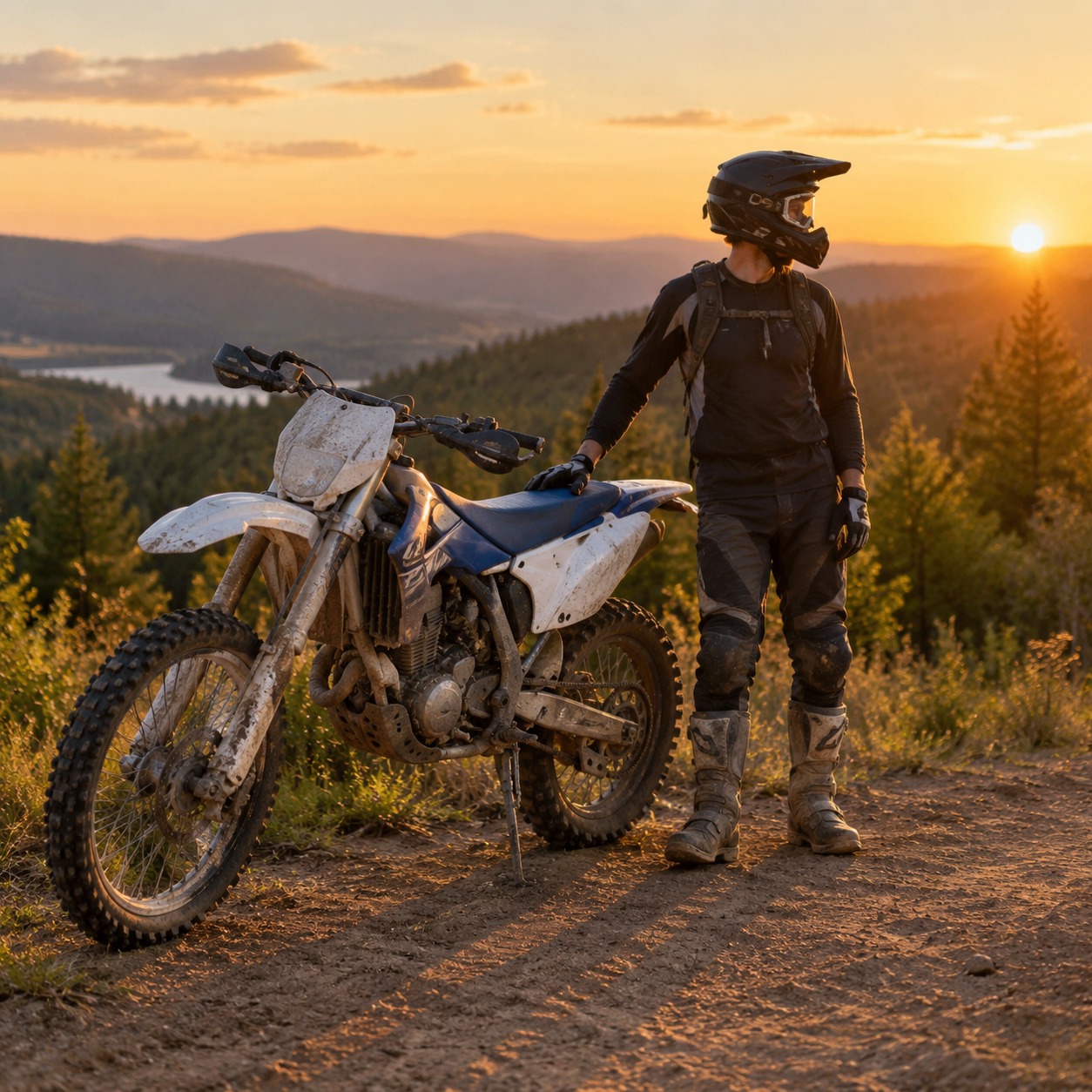
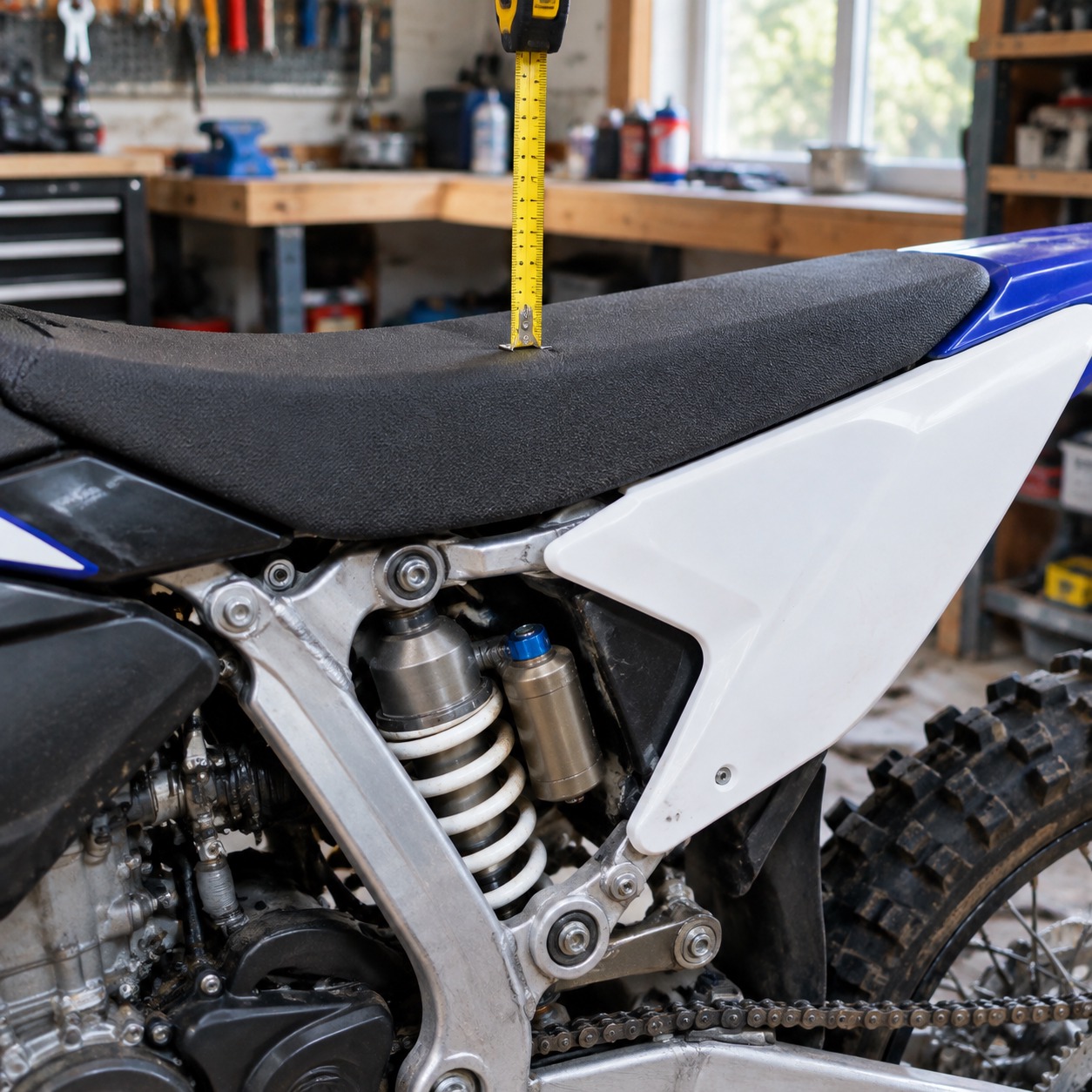
Here is the math that actually matters. A full-size motocross bike sits at roughly 37 to 38 inches of seat height. A trail bike in the same class runs 34 to 36 inches. A “mini” or mid-size bike drops to 30 to 33 inches. Your inseam, not your height, decides which band you belong in. I have a 30-inch inseam and I am 5’10”. On a 38-inch seat I could only get one toe down, which meant every off-camber stop was a coin flip.
A rough rule that has held up across the riders I have helped set up: you want both feet flat, or at minimum both balls of the feet, touching the ground with the bike upright and the suspension settled under your weight. If you are on tiptoes at a standstill, you will drop it in the rocks. Dropping a 240-pound bike on a $400 helmet is how a cheap bike becomes an expensive one.
Two ways to fix a bike that is slightly too tall. A lowering link runs $80 to $150 and drops the rear 1 to 1.5 inches. Shaving the seat foam costs $50 to $120 at an upholstery shop and buys you another inch. Both change handling slightly, and neither is free, so factor that into the purchase price before you commit.
Match Displacement to Terrain and Body Weight
Engine size should follow seat height, not lead it. Once you know your height band, the cc question gets much simpler.
For a full-size adult frame, here is what I have seen work in practice:
- 125cc two-stroke or 230-250cc four-stroke air-cooled trail bike: the entry point. Light, forgiving, cheap to maintain. A top-end rebuild on an air-cooled 230 runs about $300 in parts if you do it yourself.
- 250cc four-stroke motocross or 250cc two-stroke: the jump most people make too early. Fast enough to hurt you, and valve service intervals on a race four-stroke can hit 15 to 20 hours of ride time. That is a $600 to $900 service if you pay a shop.
- 450cc four-stroke: only if you are already fast on a 250. The power is not the issue. The weight and the rotating mass are. A 450 will wear you out on a tight trail in 40 minutes.
Body weight matters less than people think, but it is not irrelevant. Under 140 pounds, a 450 will simply ride you. Over 220 pounds, a 125 two-stroke will feel like it is working against you on climbs, and you will be slipping the clutch constantly, which is how you cook a $150 clutch pack in a season.
If you are weighing a used bike against a new one, the maintenance schedule is the hidden cost. More detail on comparing ownership costs across models can be found at , which breaks down service intervals by displacement class.
The Real Cost of Going One Size Too Big
Everyone wants to buy the bike they will grow into. I did. It is a bad trade.
Here is the accounting. A rider who buys a 250 when they should have bought a 230 spends the first season scared, which means fewer hours in the saddle. Fewer hours means slower skill growth. Slower growth means they are still scared in month eight. Meanwhile the 230 rider has done 60 hours of actual riding and is now faster on real trails.
Then there is the resale hit. Bikes in the 230-250 trail class hold value well because the demand pool is huge. Bikes that are visibly too much for their owner often come with crash damage, and buyers can smell it. I have watched a clean 2021 trail bike sell for $3,800 and a same-year race bike with bent bars and scuffed plastics sit at $3,100 for two months.
Add the gear. A too-big bike demands better protection because the crashes are harder. That is another $500 to $900 for a proper helmet, boots, and knee guards. The cheap bike plus good gear beats the expensive bike plus a $120 helmet every single time.
What I Would Do With a $3,000 Budget
Spend $2,300 to $2,600 on a used air-cooled trail bike in the right seat-height band. Set aside $200 for a lowering link or seat shave if needed. Put the rest into tires and a fresh air filter. Ride it for a year, sell it for close to what you paid, and then decide if you want the 250.
That path costs you almost nothing in depreciation and teaches you what you actually want. Buying the 250 first costs you a season and a few hundred dollars in resale. The answer to what size dirt bike do I need is almost always smaller and cheaper than the one you are eyeing right now.