How much does a revalve actually cost you — and what happens if you skip it? I ask because I was the guy who spent $900 on a full revalve before I’d even learned to set sag. The bike felt worse for three months. This is the process I wish someone had handed me first.
Start with the free stuff before you spend a dime
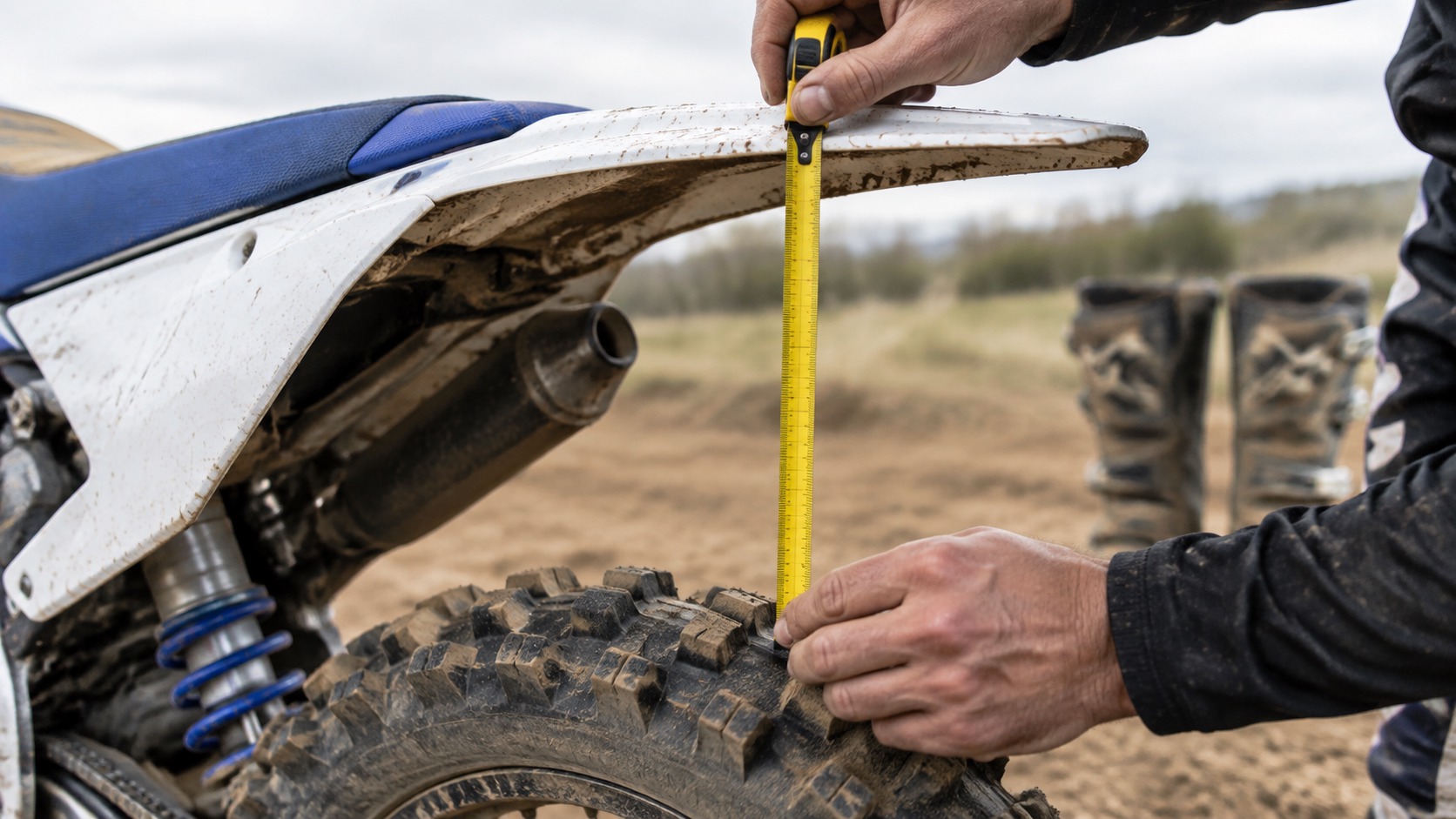
Before you call a suspension shop, do the boring work. Set race sag and static sag, write the numbers on masking tape, and stick it to your fork guard. On my 2019 YZ250F, I ran 102mm race sag when the manual wanted 100-105mm, so I was technically fine — but my fork compression clickers were 14 clicks out of a 16-click range. Basically closed. No revalve on earth fixes a rider who’s fighting his own clickers.
Then log your complaints in plain language. Not “feels harsh” but “deflects off square-edged braking bumps at the bottom of the third-turn downhill, forks blow through and I lose the front.” I keep a note on my phone after every ride. Three rides of notes beats one vague phone call to a tuner every single time.
Cost so far: zero. Time: about 40 minutes with a buddy and a tape measure. If your problems disappear here, congratulations — you just saved yourself $700 to $1,200, which for a student is roughly a semester of ramen and one very sad bank statement.
What a revalve actually changes (and what it doesn’t)
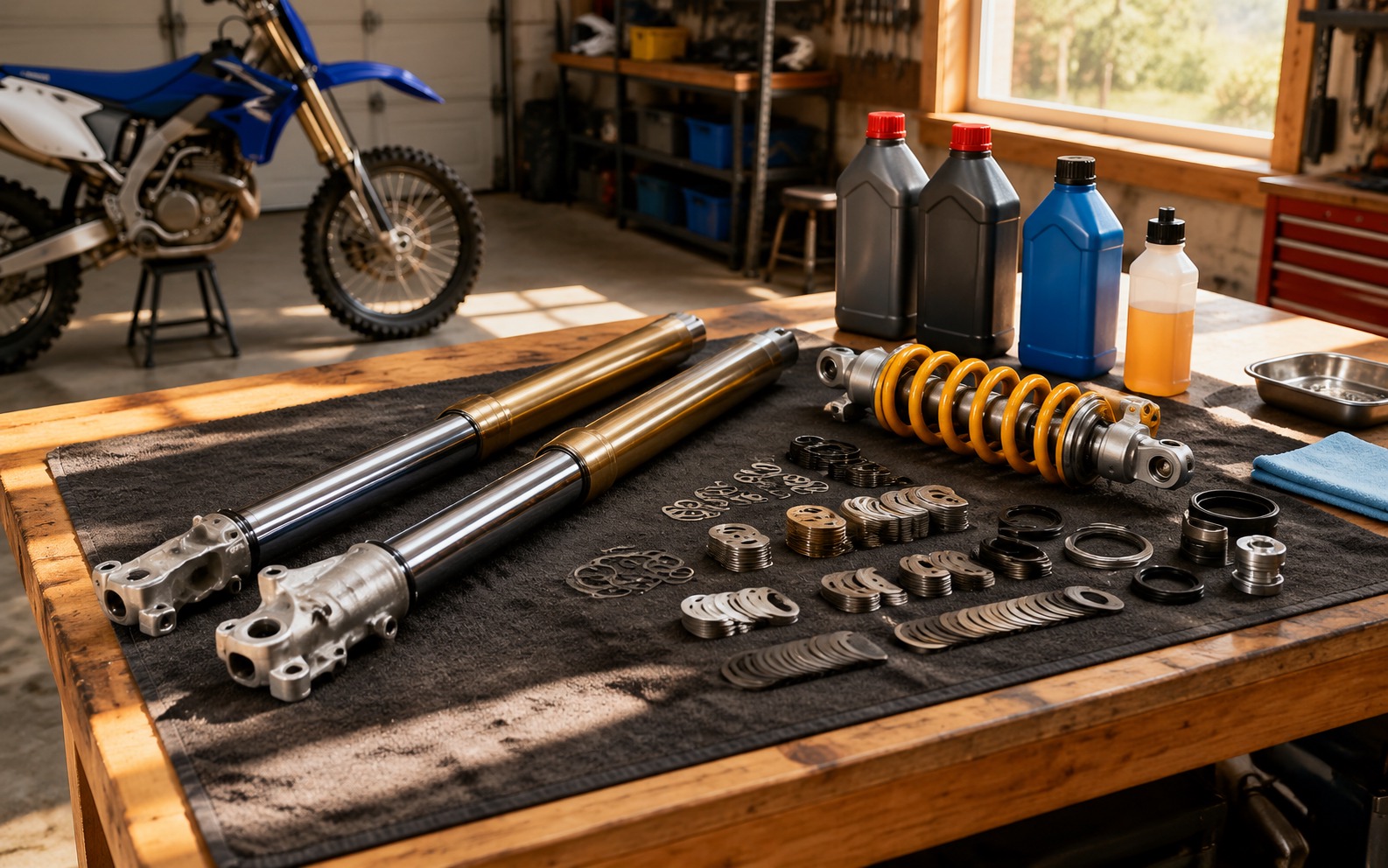
A revalve means pulling the shim stacks inside your fork cartridge and shock, then rearranging or swapping shims to change how oil flows through the valving. That’s it. You’re not buying magic. You’re buying a different damping curve.
What it can fix: harshness on small chop, blowing through the stroke on big landings, a rear that kicks sideways under acceleration, a fork that dives under braking. What it cannot fix: worn bushings, blown seals, a spring rate that’s wrong for your weight, or a shock that hasn’t been serviced since 2018.
Here’s the number that surprised me. When I finally sent my forks in, the shop found 180 hours on the original oil. It came out the color of chocolate milk. They told me a basic service with fresh oil and nitrogen would have solved maybe 70% of what I was feeling. The revalve handled the rest.
So the honest order of operations is: springs first, then service, then valving. Springs run $110 to $160 per end. A full service with seals and oil runs $180 to $280 per end at most shops. A revalve adds roughly $200 to $350 on top of that per end. Stack those and you’re looking at $900 to $1,400 for both ends done properly, plus shipping both ways if you’re mailing them.
How to figure out if you’re a revalve candidate
Run this checklist. If you answer yes to two or more, a revalve is probably money well spent.
- Your spring rates match your weight and you’ve still got problems.
- Suspension has been serviced within the last 40 hours.
- You ride the same terrain often enough to notice changes — same track, same trails, week after week.
- You’re within a few seconds per lap of where you want to be, and the bike is the thing holding you back.
- You can describe the problem well enough that a tuner nods instead of squinting.
And the reverse list, which is where I lived for a year:
- You’re still figuring out body position and braking points.
- You ride three different tracks with wildly different dirt.
- You’ve never touched a clicker.
- Your budget for the whole season is under $1,000.
If that second list sounds like you, spend the money on tires, gas, and seat time. A revalve on a rider who’s still learning to corner is like buying racing shoes before you can run a mile. I know because I did exactly that, and my lap times got worse before they got better.
The step-by-step process that actually works
Here’s how I’d do it now, in order, with real numbers from my last go-round.
- Baseline ride. Pick one section that bothers you. Ride it five times, note what the bike does. Two hours.
- Set sag and clickers. Write everything down. One hour.
- Fresh service. New oil, seals, nitrogen. Ride it for two full sessions before judging. $400 to $560 both ends.
- Reassess. If it’s 80% better, stop. If it’s still wrong, you now have a real, specific complaint to hand a tuner. Two rides.
- Call two tuners. Describe your weight, skill, terrain, and the exact complaint. Ask what they’d change and why. If they can’t explain it in plain words, hang up. One afternoon.
- Ship or drop off. Expect 7 to 14 days turnaround. Budget $900 to $1,400 total.
- Test properly. Same section, same conditions, clickers back at baseline. Give it three rides before you decide anything. I broke this rule once and hated a setup that turned out to be genuinely good.
One more thing that saved me a headache: ask the tuner to write down the shim stack spec and the oil weight they used. When you sell the bike, that sheet is worth real money to a buyer. It also means the next shop isn’t starting from zero.
So, is revalve suspension worth it?
For a rider with correct springs, fresh oil, a specific complaint, and enough seat time to feel the difference — yes, and it’s one of the best dollars-per-second upgrades on the bike. For a student still building fundamentals on a tight budget, no. Not yet. Put the money in tires and gas, and revisit this in a season.
The trap is thinking a revalve is a purchase. It’s really the last 20% of a process, and you can’t buy the last 20% before you’ve done the first 80%. I learned that the expensive way. You don’t have to.