How much should a first pair of dirt bike boots cost before it stops being a waste of money? That is the question I get most from students and career-changers doing their homework on this sport, and it has a boring, useful answer: about $180 to $320.
I have watched riders show up to their first trail day in hiking boots and riders show up in $600 flagship motocross boots, and the gap in outcome is rarely about the price tag. It is about knowing which parts of a boot actually protect you, and which parts are marketing. This dirt bike boots guide is built around that split, using the beginner-versus-veteran contrast I keep running into when I advise small shops and riding schools on gear budgets.
Beginners buy by brand; veterans buy by shell material
The single biggest fork in the road is the outer shell. Beginners tend to walk into a shop, recognize a logo, and buy whatever fits that logo’s price range. Veterans look at the shell first, because that is what decides whether a boot survives a season or a decade.
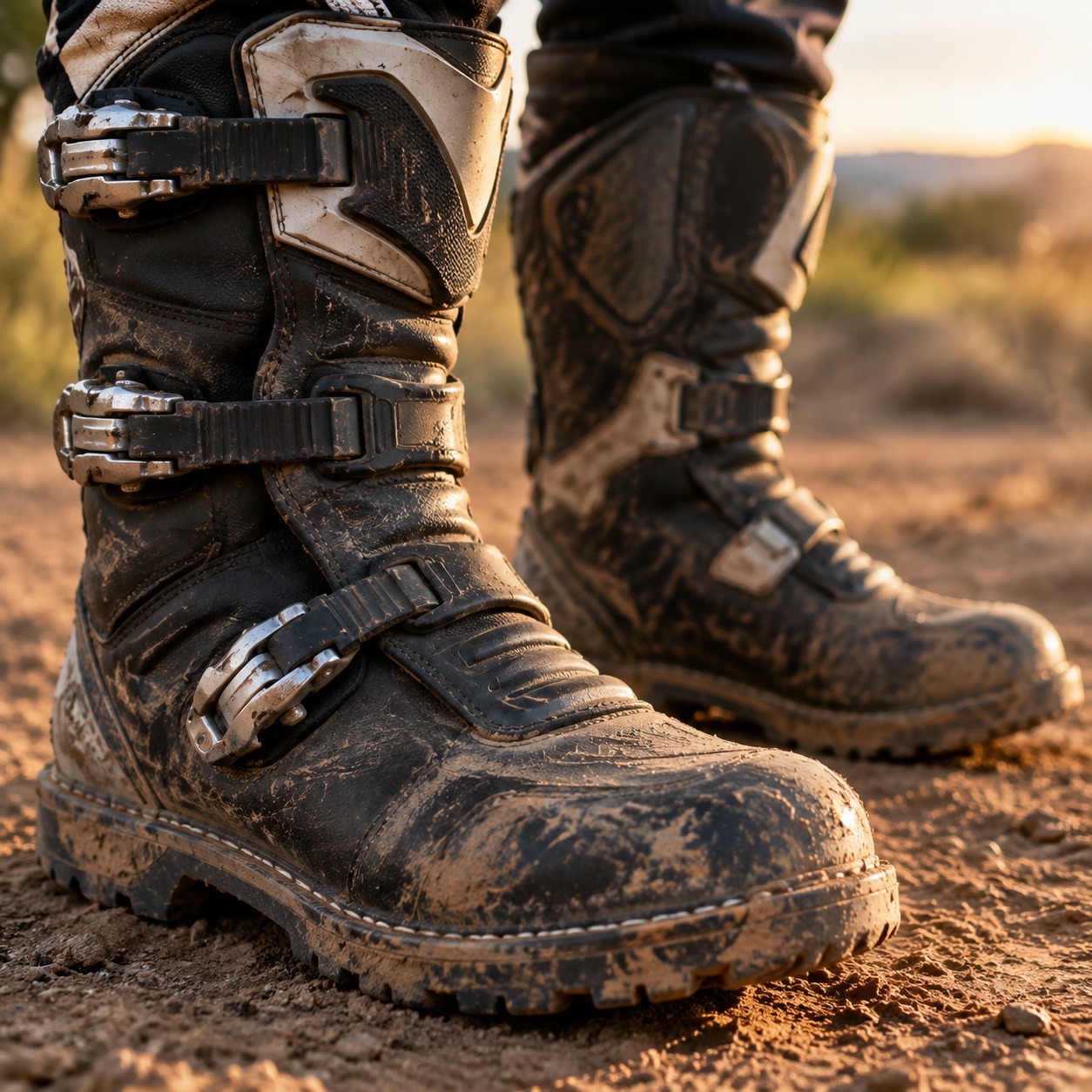
There are three shell types worth knowing. Full leather is the traditional build: it breaks in, molds to your foot, and is repairable, but it soaks up water and gets heavy when wet. Synthetic microfiber is lighter, dries fast, and holds its shape, but the seams are usually the first thing to fail. Hybrid shells mix leather panels at the flex points with synthetic elsewhere, which is why most mid-range boots in the $220 to $350 bracket use them.
Last spring a 19-year-old student I was helping gear up bought a $140 pair of all-synthetic boots for trail riding in wet clay. By week six the stitching at the ankle flex point had opened and the buckle straps had stretched. She replaced them with a $260 hybrid pair and rode the rest of the season with no repairs. That is a $120 lesson in shell material, not in brand loyalty.
If you are still mapping out what gear comes before what, more structured buying frameworks are worth reading at before you commit to a boot budget.
Fit is a measurement, not a feeling
Beginners try boots on, wiggle their toes, and buy the pair that feels comfortable in the shop. Veterans bring a tape measure and a pair of the socks they actually ride in.
Here is the routine I give people. Measure your foot at the end of the day, when it is at its largest. Add 8 to 12 millimeters of toe room, because your foot slides forward under braking and a boot that is snug standing still will jam your toes on a steep descent. Then check three contact points: the heel must lock down with no lift when you stand on your toes, the instep must not pinch when you crouch, and the calf closure must have at least two positions of adjustment left.
One more number that surprises people: boots do not break in the way street shoes do. A leather boot might gain 3 to 5 millimeters of internal volume over the first 15 to 20 hours of riding. A synthetic boot gains almost nothing. If it is painful in the shop, it will be painful on the trail.
Buy the boot that fits your foot today, not the boot you hope your foot will grow into. Feet do not grow into boots. They just hurt.
The features that matter, ranked by what they save you
When I help a student build a gear list, I rank boot features by the cost of the injury or repair they prevent, not by how they look on the shelf. Here is that ranking, top to bottom.
- Ankle and shin protection. Rigid side panels and a shin plate stop the two most common trail injuries: the peg driving into your arch and a rock or branch hitting your shin. This is the one feature I would not compromise on at any price.
- A replaceable sole. Off-road soles wear out in 60 to 100 hours of real riding. A boot with a stitched, replaceable sole costs $40 to $70 to resole; a molded sole means a new pair of boots.
- Buckle and strap quality. Cheap plastic buckles crack in cold weather. Metal or reinforced composite buckles with replaceable straps are worth the extra $30.
- Water resistance. A membrane helps in wet conditions but adds weight and cost. For dry-climate trail riding, a vented boot with no membrane is lighter and cheaper.
- Weight. Every 100 grams matters over a four-hour ride, but weight should never be traded against protection. Buy light boots after you have protection, not instead of it.
Notice what is not on the list: colorways, brand prestige, and the stiffness rating printed on the box. Veterans ignore all three.
New versus used, and when to walk away
A used pair of boots can save a student $100 to $200, and I have recommended it plenty of times. But there is a checklist, because a worn-out boot is worse than a cheap new one.
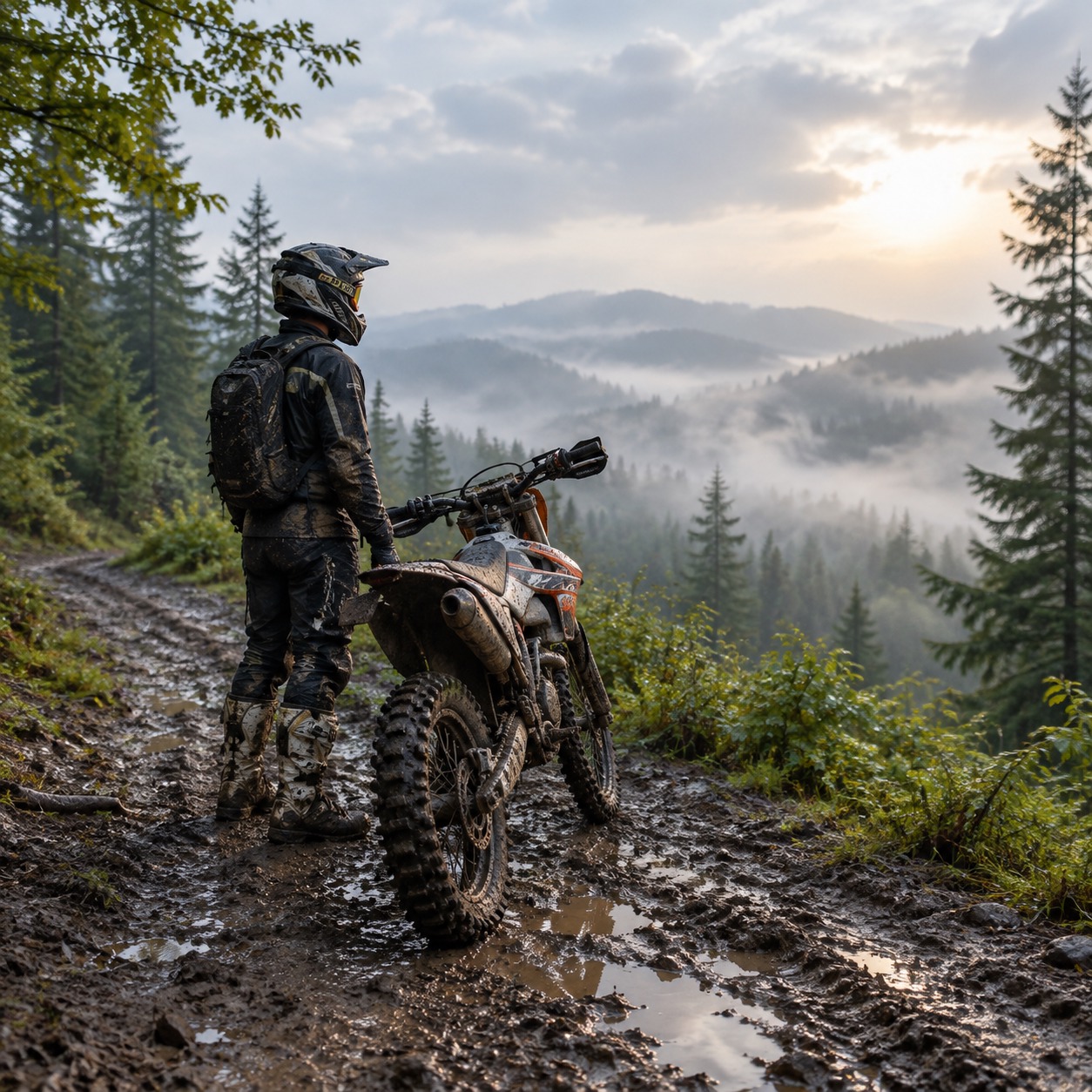
Walk away if the sole is worn through at the peg contact point, if any buckle is cracked or missing, if the shell has deep gouges that go through to the liner, or if the previous owner’s foot shape has visibly deformed the footbed. A boot molds to one foot. Buying someone else’s molded boot is buying someone else’s problems.
What is worth buying used: a lightly ridden pair from a rider who quit after a season, in a size that matches your measured foot, with all buckles intact. Check the manufacture date inside the tongue. Boots older than about eight years have plastic that has been sitting in heat cycles and can crack on the first cold ride.
For a student on a tight budget, my usual split is $200 to $280 on new mid-range boots, or $90 to $150 on a clean used pair, with the savings going toward a helmet and knee guards. Boots protect your feet and ankles. The helmet protects everything else.
What to do this week
Measure your feet at the end of the day, in riding socks. Write down the length in millimeters. Set a budget ceiling before you open a single product page, and decide in advance whether you are buying new or used. Then check the shell material and the five ranked features above, in that order.
The riders who get this right are not the ones who spent the most. They are the ones who measured first and bought second.