Most trail riders assume bib mousse is a race-only luxury. Run the numbers over two seasons, and the cheap option is the one that costs more. Here is the arithmetic.
What You Actually Pay Up Front
A 21-inch front mousse tube for trail riding runs about $130 to $160 depending on brand and size. The matching 18-inch rear sits around $150 to $180. Add rim locks if you do not already run two per wheel ($15 each), plus mounting paste ($12 a tub) and you are looking at roughly $330 to $400 for a first set.
A heavy-duty tube, by contrast, is $30 to $45. That gap is why most students I talk to stop reading right there. Fair. But the purchase price is the smallest number in this equation.
Last spring I tracked a full season for two riders on identical 250 four-strokes, same trails, same pace. Rider A ran tubes. Rider B ran mousse. Both logged their spend in a shared spreadsheet, which is the only reason I trust the numbers below.
The Hidden Line Items
Flat Frequency and Downtime
Rider A punctured nine times across 41 rides. Six were pinch flats from square-edge rocks at low pressure, three were thorn or nail. Average repair time on the trail: 22 minutes if he had a spare tube and levers, 50 minutes if he had to patch. That is roughly five hours of his season spent kneeling in dirt, plus two rides cut short because he ran out of spares.
Rider B punctured zero times. Mousse cannot go flat. He did, however, replace his rear mousse mid-season when it shrank past usable density.
Consumables You Forget to Count
Tubes need replacing, not just patching. Rider A burned through four tubes at $38 average, plus two patch kits and a set of tire levers he snapped. Total tube-side consumables: about $170 across the season.
Mousse wears differently. It compresses and loses volume, and heat accelerates that. Rider B’s rear mousse lasted about 60 hours of hard trail use before it felt vague and started allowing rim contact on big hits. Front mousse lasted longer, closer to 90 hours, because the front takes less drive load.
The Two-Season Comparison
| Item | Tubes (2 seasons) | Mousse (2 seasons) |
|---|---|---|
| Initial setup | $90 | $380 |
| Replacement consumables | $340 | $290 |
| Mounting paste / lube | $0 | $48 |
| Trailside repair time | ~11 hours | ~0 hours |
| Rides cut short | 4 | 0 |
| Approx. total cash | $430 | $718 |
So mousse still costs more in pure dollars, around $290 over two seasons. That is the honest answer, and anyone telling you mousse is cheaper outright is selling something.
The question is whether 11 hours of your season and four ruined rides are worth $290. For a student riding weekends, that math is personal. For anyone whose trail time is scarce, it flips fast.
Where Mousse Quietly Wins
Pressure. A tube at 12 psi pinches on sharp rock; a mousse behaves like a consistent 10 to 12 psi with no pinch risk, so you can run softer and get traction without the flat penalty. Rider B cleared two technical climbs Rider A walked, purely from rear grip.
Weight is the trade-off nobody mentions. A rear mousse adds roughly 1.5 to 2 pounds over a heavy tube, and that mass sits at the worst possible place. You feel it on tight switchbacks.
Mounting a Mousse Without Losing Your Mind
This is the part that scares people off, and it should not. Budget 45 minutes the first time, 20 once you have a method.
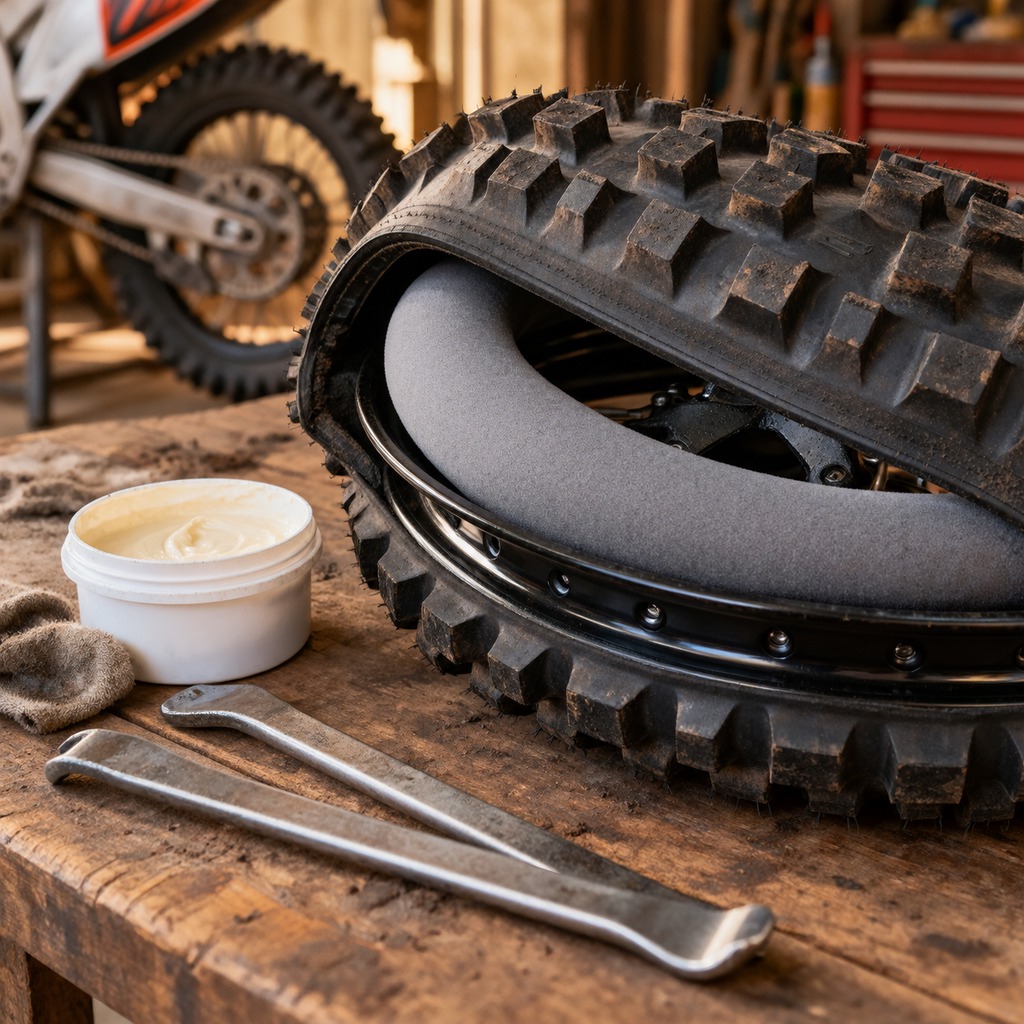
- Warm the mousse first. Cold mousse is stiff and fights you. Leave it in a warm room or in the sun for an hour before mounting. This single step cuts your swear count in half.
- Lube everything. Mounting paste on the mousse, the inside of the tire, and the rim. Be generous. Dry mousse tears.
- Seat one bead fully before touching the other. Use three tire irons, small bites, working around the rim. Do not lever in big jumps.
- Check density by feel. Squeeze the mounted tire. It should feel firm but compress about a third of the way under thumb pressure. Rock hard means the mousse is oversized for the tire.
- Ride it gently for the first 20 minutes. The mousse settles and distributes paste. Then check bead seating again.
One mistake I made the first time: I sized the mousse to the tire’s nominal width and ignored the manufacturer’s cross-reference chart. The result was a rear that felt like a rock and chunked the rim on every square edge. Size to the chart, not to the sidewall number.
If you want a deeper walkthrough of sizing charts and brand differences, keeps an updated reference that matches real tire dimensions rather than marketing labels.
Risk, and Who Should Skip It
Mousse has one genuine failure mode that tubes do not: heat degradation. Long road sections or sustained high-speed fire roads cook a mousse from the inside. If your trail riding involves 20 minutes of pavement to reach the dirt, that heat cycles the mousse faster and shortens its life. Rider B’s rear mousse life dropped from an expected 80 hours to 60, and I attribute most of that to his 15-minute road transfer each way.
Second risk: you cannot adjust pressure. If you ride everything from mud to hardpack in one loop, a tube lets you compromise. A mousse does not.
Third: cost of a bad size. Order wrong and you have a $170 paperweight. Tubes are forgiving. Mousse is not.
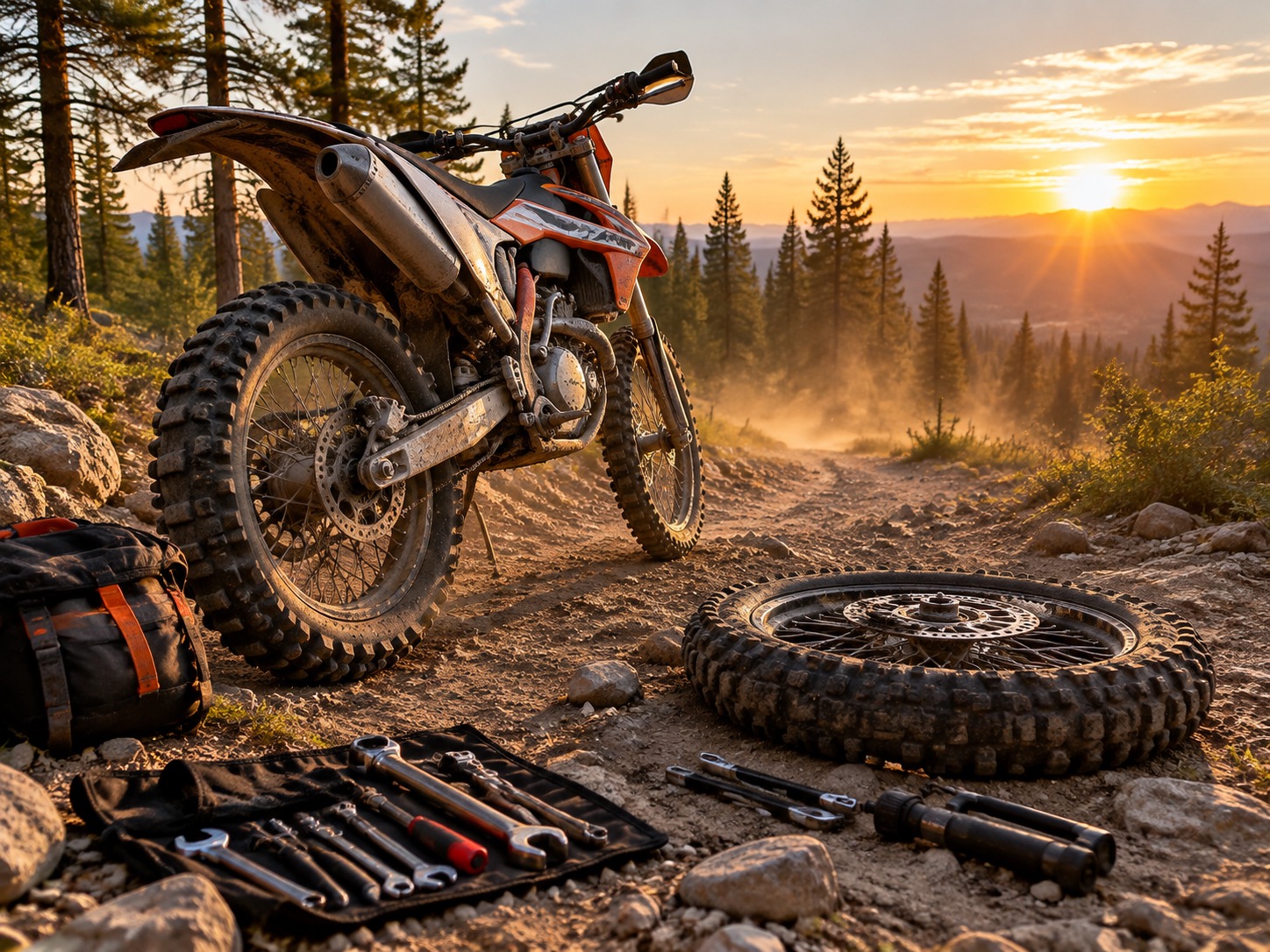
My read for students doing the math: if you ride less than 30 hours a season and mostly close to home, tubes plus a good patch kit remain the rational buy. Cross 50 hours, or start losing rides to flats, and the mousse tube for trail riding stops being a luxury and becomes the cheaper line item once your time has a value attached to it.
Run your own numbers before you buy. Two columns, two seasons, and be honest about how many rides a flat has already cost you.